
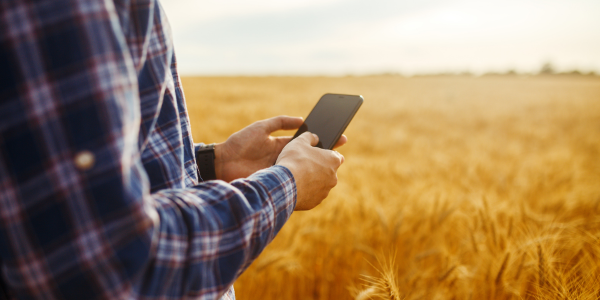
A Frederick County family is planning their Saturday morning. They want fresh strawberries, but instead of driving around hoping to find a stand, they pull out a phone and search “strawberries near me.” Whatever shows up on that screen is where they are going. If your farm isn’t among the results, the trip is going somewhere else, even if your berries are better.
Last month, we talked about the in-person shopping experience. This month we go a step earlier, to the moment a customer decides where to shop at all. Increasingly, that decision happens on a phone, often before they ever leave the house.
The good news is that Frederick County farms are ready for this. According to the USDA Census of Agriculture, 1,132 county farm operations reported internet access in 2022. Mobile access more than doubled from 321 operations in 2012 to 662 in 2022, and satellite access grew from 157 to 266 over the same period. Rural connectivity is no longer the bottleneck it used to be. The question is whether your operation is using that connection to bring customers to your driveway.
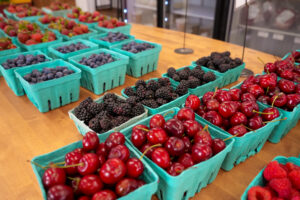 Three things should be on every farm’s digital checklist, and all three are free. First, a Google Business Profile. Claim it, fill in your hours, add photos, and ask three happy customers to leave a review. When someone searches “farm stand near me” on a Saturday morning, this is what decides whether you show up. Reply to every review you get with a quick thank-you on a five-star and a calm and factual response on a one-star. Both responses tell future customers what kind of operation you run. Second, one social media account posted consistently. One platform done well beats three done sporadically. Third, a simple landing page or up-to-date website with your address, hours, what is in season this week, and how to pay.
You do not need a full online store to sell online. Many farms start with a pre-order form for Saturday pickup, a CSA sign-up page, or a basic shop for shippable value-added products. The point is to let a customer commit while they are thinking about it on Wednesday afternoon rather than hope they remember on Saturday morning.
Value-added products are a particularly strong fit for digital. The 99 Frederick County operations producing value-added goods in 2022 generated more than $13.5 million in sales, and many of those products, like jams, baking mixes, specialty meats, gift boxes, ship well and travel further than a basket of greens. A simple online store can turn a single jar of pepper jelly into a regular order from a former neighbor who moved to Annapolis or a visitor from Pittsburgh.
Two more high-leverage tools. A $20 geo-targeted Facebook or Google ad pointed at ZIP codes within a fifteen-minute drive of your farm will reach more potential customers than a newspaper ad costing several times more, and you will see exactly who clicked. Second, accept mobile payments. Square, Stripe, Venmo, tap-to-pay on a phone. Every friction you remove at the register is a sale you keep, and a growing share of customers under forty simply do not carry cash.
One thing the Center for Farm Retail Innovation feasibility study is exploring is shared digital infrastructure: a central directory of Frederick County farms, a unified online ordering option, and joint training on social media and ads. Individually, these tools are getting cheaper. Collectively, they could become a competitive advantage that no single farm could build alone.
Your homework before the next issue: claim or update your Google Business Profile and post one photo of your operation. Just one. It takes fifteen minutes and is the single highest-return digital task you can do this month.
Next month: Strength in Numbers: how community partnerships, referrals, and local networks can drive more sales than any ad budget.